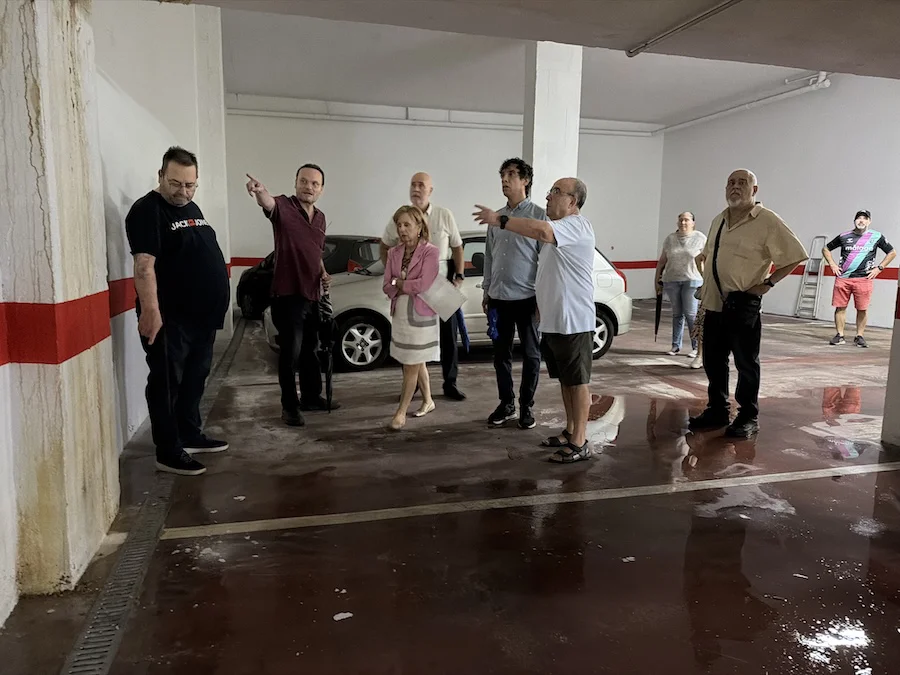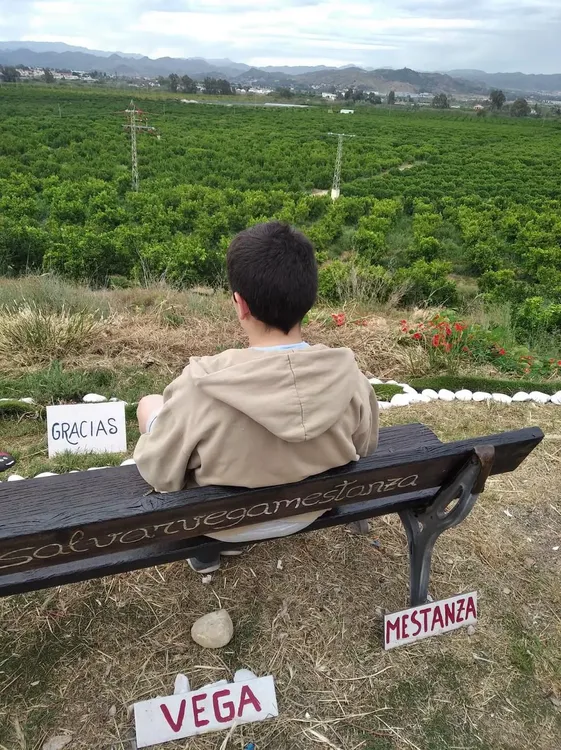
Alhaurín de la Torre reconoce la defensa de la Vega de Mestanza en el Día Internacional de las Mujeres Rurales, símbolo de protección ambiental.




 Redacción

Editorial:
Spain has recently experienced an intense wave of seismic activity, with over 55 earthquakes recently hitting the province of Granada in a single day. The strongest tremors reached magnitudes of 4.7 and 4.8 on the Richter Scale. The last time Granada was hit by quakes was in 1955.


The Richter Scale, incidentally, is not linear but exponential. Each whole number increase on the scale (e.g., from 4.0 to 5.0) represents a 10-fold increase in the measured wave size. Thus, an earthquake of magnitude 6.0 has waves 100 times larger than a 4.0 magnitude earthquake.
Spain sits directly above the active collision zone of the African and Eurasian tectonic plates, exposing several regions to notable seismic hazards. Multiple earthquakes, as just occurred in Granada, are known as a swarm. Very frightening they are, too.
According to the seismic data monitored by the Instituto Geográfico Nacional, Spain’s risk is concentrated along five key fault lines: Andalucía (Granada, Málaga, Almería), Murcia (Lorca region), the Pyrenees (North Border), Galicia and finally, the Canary Islands.
Google AI grimly lists several major destructive earthquakes and notes that they are rare. The 2011 Lorca Earthquake (Magnitude 5.1), struck at an extremely shallow depth, causing severe building collapses, nine fatalities, and hundreds of injuries in the Murcia region, while the 1884 Andalusian Earthquake (Magnitude 6.5), is one of the most destructive in Spanish history, claiming over 800 lives in Granada and Málaga.
Another major strike occurred in Torrevieja, Alicante, back in 1829, with almost 400 reported dead (a computer mock-up scenario of this same earthquake, now centred around a major residential and tourist area, figures a similar event could produce as much at 20,000 dead today).
Going back, there was the Lisbon earthquake. This, perhaps the worst earthquake in the history of the Iberian Peninsula, is dated November 1st, 1755 (All Saints Day) and is estimated at 7.7 in strength. The tremor ‘claimed the lives of tens of thousands of people and opened a profound debate among theologians and philosophers about how God could have allowed such a tragedy’ (it was, after all, a religious holiday). In combination with subsequent fires and a tsunami which reached as far as Huelva and Cádiz, the earthquake almost destroyed Lisbon and adjoining areas. Up to 100,000 lives are thought to have been lost on that fateful day.
My own region of Mojácar and Vera was largely destroyed in an earthquake which occurred on the night of November 9th, 1518.
There had been a series of worrisome tremors occurring that year ever since the middle of June, but nothing to match the final convulsion.
It was a Tuesday, and the earthquake arrived around about midnight. The market-town of Vera was totally destroyed and Mojácar was badly hit. There's an eye-witness account from the then mayor of Mojácar – Iñigo Guevara – who described the collapsed castle in these terms: 'I saw it all fallen in, until the very foundations were visible. There is almost nothing left of the fortress which is so flattened that it appears to have been destroyed by all the artillery of the world'. A report from the time says that almost a third of the eighty homes which made up Mojácar had collapsed. Another report says that the clergy were frightened to give Mass in the church due to its state. It says in the original: "En la dicha villa de Moxacar no se dize misa a causa que los clerigos no osan entrar a dezir misa a la yglesia porque esta para caerse a causa del terremoto que agora hizo”. A little over a dozen people died in Mojácar because of the earthquake. In Vera, the death-toll reached 150.
Just four years later, in 1522, Almería City was almost completely destroyed in another major quake, with at least 2,500 deaths. Those modest numbers, if ‘una terremoto’ of a similar size visited us today, could easily be much higher.
‘We are waiting’, says one newspaper, ‘…for the next major earthquake in Spain: “The clock is ticking and we’re not prepared”. They can’t put a date on it, but some geologists believe we’re in “extra time” for a repeat of an earthquake as destructive as those that shook the peninsula more than a century ago. They also warn that regulations are outdated and fail to consider the worst-case scenario’.
Which reminds me, next week I shall be in Granada, staying with my in-laws. I doubt I’ll get much sleep.
…...
Housing:
From Eye on Spain here: ‘Why Spain Is Dominating the Global Digital Nomad Scene’.
From Majorca Daily Bulletin here: ‘Figures from the College of Registrars indicate that roughly a quarter of all purchases of homes by residents of the Balearics in the first quarter of 2026 were made in other parts of Spain. There were 3,038 transactions, of which 716 were for properties on the mainland. The reason for this interest in mainland homes is obvious. There is greater affordability in most of Spain compared with the Balearics, and the trend has been gathering pace…’
‘103,000 homes in Murcia are classed as empty, so where are they? The latest INE figures show that one in eight homes in the Region is classified as unused, with Cartagena recording the highest number’. Murcia Today has the story.
From Infobae here, ‘The phantom skyscraper in the middle of a barren landscape in Murcia: the forgotten footprint of the real estate bubble. Built during the construction boom and abandoned halfway through, the Torre Lucas still stands as a symbol of urban development madness in Abarán’. (See the photo!)
…...
Tourism:
‘Tourist Spain collapses in summer and overwhelms public services: "It's like a small car you're driving at 80 kilometres per hour and suddenly have to accelerate to 120 on the highway." In Spain, some municipalities see their population increase tenfold in the summer. Tourism overwhelms public healthcare and services such as waste collection and water management, as various experts reported to El HuffPost’. It’s certainly true as some public servants, doctors, lawyers, mechanics and so on are also on holiday (probably cluttering up some other tourist resort).
Spain welcomes 67 million international air passengers in the first seven months of 2026.
‘The Most Impossible Rise of a City Ever: Benidorm’ on YouTube here.
…...
Finance:
From Foro Coches Eléctricos here: ‘China chooses Spain to manufacture its cars: the investments that are changing European industry’. The article says: ‘Spain is ceasing to be merely one of the main European markets for Chinese brands and is becoming something much more significant: one of their major industrial bases in Europe. Names like Chery, SAIC, BAIC, Geely, and Leapmotor already have various projects on the table to manufacture cars in our country, while rumours of others are also growing, such as the Changan plant and the long-awaited BYD factory. The reason for this shift is quite clear. Trade tensions between China and the European Union, along with tariffs applied to electric cars manufactured in China, are making production within Europe increasingly attractive. For Chinese manufacturers, local production not only reduces some of the impact of trade barriers but also allows them to get closer to European customers and project an image of a manufacturer integrated into the continent…’
From The Corner here: ‘Brussels approves Spain’s proposal to bid for one of the European AI gigafactories’.
From EU Analysis here: ‘What happens if a UK government removes benefits from EU citizens in breach of the withdrawal agreement?’. The article considers possible retaliation from the EU, however (it notes), the EU cannot respond to the UK breach of EU citizens’ rights by taking UK citizens’ reciprocal rights away (Art 178 of the Withdrawal Agreement).
From LaSexta here: ‘From filling a shopping cart with 50 euros to not even being able to afford a basket: the OCU estimates a 35% increase in food prices over three years’.
…...
Politics:
The politicians are returning after their summer break, conscious that this will be – at best – the final year of this legislature. Some of them managed some time off, while others were busy either defending their position or attacking the folk from the other side. The ‘invasion’ of Ceuta has taken up a lot of space, as has the penthouse mysteriously bought and allegedly sold for the future use of Isabel Díaz Ayuso who may (or may not) have broken with her boyfriend and is now living in a tony barrio of north-west Madrid called Puerta de Hierro. Neither subject has finished its course.
The Ayuso band of supporters has taken to warning Feijóo not to probe too deeply into her penthouse machinations, as the leader of the PP is said to be spending more on his own comfort than his parliamentary stipends would support. We read: ‘Ayuso's inner circle issues a warning to Feijóo and focuses on the properties in Moaña (Pontevedra), owned by Feijóo’s wife Eva Cárdenas and a large rental property in El Viso (Madrid): "He shouldn't talk too much..." Sources close to the regional president, consulted by El Constitucional, have shifted the focus away from the Madrid government's purchase of the penthouse, pointing to the controversies surrounding two properties occupied by Feijóo’. Readers are reminded that Ayuso saw off Pablo Casado when he threatened her family with charges of corruption. Ayuso says the penthouse is no longer a topic of interest: “chao pescao”.
Other PP knives are out for Ayuso says Público here: ‘The infighting within the Madrid Partido Popular is further complicating Ayuso's already weak and isolated position since her (unfortunate) trip to Mexico and following the purchase and sale of the 'ultra-luxury' penthouse in Chamberí’.
…...
Ceuta and Melilla:
From a Facebook post here (take it or leave it): ‘US Congressman Thomas Massie reveals new information about the involvement of the US and Trump in the attack on Spain. Quote: "Two weeks before migrants from Morocco invaded Ceuta, the United States Congress passed a bill allocating $40 million to Morocco, along with a committee report stating the following: The cities of Ceuta and Melilla, administered by Spain, are located in Moroccan territory and remain the subject of a historical claim by Morocco. In plain English, so everyone understands: Trump gave Morocco a $40 million check with the stipulation "Ceuta and Melilla are Moroccan".’. A more sober version comes from Al Jazeera here: ‘…Representative Massie shared a social media post several days after the incident, drawing a line between the events in Ceuta and a House appropriations committee report attached to a bill, HR 8595. … Massie focused on language regarding territorial disputes between Morocco and Spain over Melilla and Ceuta, which appears in the committee report but not the bill itself, suggesting that it mirrors Morocco’s own rhetoric. The report also recommends continuing $40m in US security assistance for Morocco. “GOP Congress voted to give Morocco $40 mil and lent credibility to their claim to Ceuta,” Massie said on August 3rd. The eccentric Ex-congresswoman Marjorie Taylor Greene went further, drawing a direct link between the legislation, and the events in Ceuta. “Republicans paid $40 million of your tax dollars to Morocco to invade Spain,” Greene said...’ there’s no doubt, but that Morocco wants control of the two enclaves.
From elDiario.es here: ‘A far-right network linked to the US and Israel is using Ceuta to attack Spain. Think tanks, influencers, and far-right, pro-Israel politicians have spent months trying to promote narratives about the Spanish “occupation” of Ceuta and Melilla in order to attack the Spanish government for its criticism of the US and Israel’.
In the likely event of some dark dealings, along comes this item from El Confidencial: ‘A group of hackers "gives Spain" the data of 70,000 Moroccan intelligence agents amid the Ceuta crisis. The Jabaroot hackers have promised to publish a list with the specific names of the agents who "orchestrated the Ceuta plan." They claim to have obtained copies of the orders given to "the agents who travelled to Castillejos (Moroccan town on the Ceuta border)."’.
El Español has: ‘Moroccan Justice Minister Abdellatif Ouahbi reaffirmed on Friday that the cities of Ceuta and Melilla constitute a "historical and geographical right" of Morocco and called for the creation of a dialogue mechanism with Spain to address their future and achieve their "return to the bosom of the homeland."’. The Spanish government ‘categorically’ rejects any proposals to cede the two cities to Morocco: ‘They are Spanish’.
‘Alleged grants of €88,000, fully paid jobs, and routes to emigrate to other countries are some of the advertisements circulating in Facebook groups where users organize irregular crossings from Morocco to Ceuta or Melilla. At Maldita.es, we have identified at least 15 virtually identical posts, published between August 18 and 19, 2026, within these groups. These posts link to websites with very similar structures and information on how to emigrate to Spain, France, Italy, or Canada, including alleged job offers and migration routes. They all end up redirecting to the same WhatsApp group with 700 members (as of August 19, 2026) which has four administrators with the telephone prefix of Morocco…’
From The Olive Press here: ‘Spain to transfer 500 migrant girls from Ceuta to mainland amid welfare concerns. Under Spanish law, the authorities have a duty of care towards unaccompanied migrant children until they turn 18. The girls, after moving to mainland Spain, will be placed in foster homes or government-run care facilities…’
King Felipe VI – who has travelled the world during his lifetime – has never visited either Melilla or Ceuta. Juan Carlos went once to both cities in 2007 and previously, Alfonso XIII was in Ceuta in 1927. This is similar to Gibraltar – the last Royal visit was with Queen Elizabeth back in 1954. The reason is the same: not to upset the larger neighbour.
Late news: the Government has decided on a single command (un mando único) to deal with the migration crisis in Ceuta under the control of the Minister Ángel Torres.
…...
Health:
‘The Spanish Agency for Food Safety and Nutrition (AESAN) publishes a report on menopausal women using data obtained, er, from men. The data on iron and vitamin C intake in the AESAN report published in April are based on studies conducted only on men and lack scientific rigor, according to several Mexican researchers. Following the complaint, the agency announced a correction’. Found at elDiario.es here.
…...
Crime and Punishment:
One of the best-known crimes of the Franco era was the executions of anything between 110.000 and 150,000 members of the losing side (and another estimated 50,000 carried out by the Republican ‘Terror Rojo’). These have been either forgotten or forgiven – or increasingly, and thanks to La Memoria Histórica (wiki) remembered. And now we come to General Franco’s memorial of those terrible times, the giant ‘Valley of the Fallen’ (now known as ‘Cuelgamuros’), built by forced labour between 1940 and 1959. It has a crypt within it holding the remains of 33,800 who died during the Civil War. Most of the remains are anonymous although Franco’s body lay there (well, in some splendour upstairs) until 2019. Spanish Television has now been granted access to the crypt and has made a documentary ‘Cuelgamuros, entre lo difícil y lo imposible’ to be shown later this year.
…...
Media:
José María Figaredo is the squeaky-voiced villain of the Vox party. One imagines him stroking a large fluffy white cat. An opinion piece from Público says of him: ‘…It seems that Figaredo was recruited by Vox to create a distraction, or rather, to concentrate in his person all the visceral disgust and historical repugnance that the party provokes, which is considerable. Not Abascal with his misplaced sheikh-like appearance, not Buxadé with his Mars Attacks costume, but Figaredo, an expert on climate change denial who denounces the feminist dictatorship and compares abortion to the guillotine. He is a man from another century, so backward that until now I thought the best description of Figaredo occurs in a novel from Benito Pérez Galdós: "He was a tiny man, well-groomed, clean, who looked like a porcelain doll dressed in civilian clothes. He had short, white hands, the feet of a young lady, and walked with small steps, careful not to step in puddles. His soul was an accounting ledger, and his body seemed to have been shrunk for fear of using too much fabric in his suit." This week a woman from Galicia corrected and expanded this description in just a few words. “Fascista, vete a tomar por culo”. That’s the stuff!’.
…...
Ecology:
‘Spain demonstrates its “critical vulnerability” to climate change: thousands of deaths from heat, fires, and drought. Scientists have been warning for decades about the dangers to Spain from rising temperatures, decreased rainfall, and more intense wildfires: saying it is “more vulnerable” in terms of “severity, mortality, and exposure” to climate-related natural disasters’. From elDiario.es here.
From Levante here: ‘Your town can't endure another summer like this, and your mayor knows it. We walk through our municipalities without finding a single fountain, while the possibility of taking refuge in the shade of the trees now sounds like an obscene desire’. I guess hanging up cloth lonas for shade is better than nothing.
Granada: 432 quakes in six days. ‘Something is very wrong under Spain — and it is not stopping’. Video in English on YouTube here.
From Spanish News Today here: ‘Asian Hornets are spreading across Spain, and experts say they are here to stay’.
…...
Various:
‘Life is not rosy here: Migrant workers in Spain’s greenhouses tell of poor pay and hardships’. CNN looks at the invernaderos of Almería and the folk who work there.
From The Olive Press here: ‘Who are the human traffickers dropping migrants onto busy beaches in Spain – and what happens to the new arrivals once they land?’.
‘Vera is getting an AVE station, what it means for buyers’ (and inevitably, sellers). Almería has never had much of a railway-service, beyond an elderly and slow line north from Almería City to Linares (Jaén) and on to Madrid. The article at Andalucía Today says that the Vera station (which would serve Mojácar) will be ‘one of only four stations on the 198km route’ between Almería and Murcia (and beyond!). To be probably completed by the end of 2029. The Almería to Granada AVE route remains in the planning stage.
From EMG here: ‘The proposal to rename the Ávila railway station "Teresa de Ávila" continues to gain support among those who believe that the city should reinforce public recognition of one of its most universal historical and cultural figures: Teresa de Jesús’.
‘A Costa Blanca ‘colony’ of around 30,000 residents – including a large British expat community – is taking steps to break away from Orihuela (Alicante) and become an independent municipality. The Orihuela Costa Independence Party (PIOC) has begun drawing up a formal segregation dossier which it plans to submit to the Valencian regional government and Orihuela Town Hall later this year’. More at The Olive Press here.
Raised in the wild: Spain's famous "wolf boy" dies. Euro News tells the story of a child abandoned in the countryside, ‘For twelve years Marcos Rodríguez lived a life without any human contact and developed his own forms of communication. He mastered the calls of the animals – from birdsong to the cry of the deer – and was convinced he could communicate effortlessly with foxes, wolves and even snakes. Throughout all those years he chose to stay far from civilisation and would run away or hide whenever he heard human voices in the mountains. Rodríguez won the trust of a wolf pack when he fed its cubs and howled whenever he sensed danger…’ As an adult, he returned to society. ‘Marcos Rodríguez Pantoja has died at 80 in Rante, a hamlet of San Cibrao das Viñas in Ourense, north-west Spain. He had lived there since 2001 and seemed to have finally found a home’.
From Gizmodo here: ‘120 Roman-Era Inscriptions Found Deep in a Spanish Cave Point to a Mysterious Goddess Named ‘Domina’. Archaeologists uncovered ancient Roman inscriptions worshipping a previously unknown goddess, inside a cave that might have had religious significance since the Stone Age’.
From Space Daily here: ‘Models of the flood that refilled the Mediterranean put its peak flow through Gibraltar at roughly 100 million cubic metres a second — around 1,000 times the Amazon's average discharge — with erosion at the Camarinal Sill reaching roughly 0.4 metres a day. When an ancient sea vanished, its return was so catastrophic that it reshaped geology itself—yet scientists still debate exactly how violent the deluge truly was’.
…...
See Spain:
What is and what was the rural world of an empty Spain. This is the Song of La Moraña de Ávila (at least, as composed for me by Google AI), where 56 small and forgotten municipalities coexist peacefully: a region of northern Ávila known as the Granary of Castille. The region has becoming depopulated over the years (Wiki).
En la Moraña abulense, donde el cereal se adora,
se extiende un mar de espigas bajo el fuego de la aurora.
La llanura es un espejo de horizontes infinitos,
donde el viento va rezando entre adobes y granitos.
Es la tierra mística y llana que cantara el viejo arcano,
la que cría el pan de oro en el invierno castellano,
donde el mudejar se eleva con su ladrillo encendido
y el silencio de los campos guarda el tiempo ya vivido.
Arévalo duerme el sueño de su historia y de su gloria,
mientras Fontiveros evoca de San Juan la fiel memoria.
Madrigal de las Altas Torres, cuna vieja de una reina,
donde el sol de la mañana con hilos de trigo peina.
Tierra noble de labriegos, de rastrojos y de calma,
donde el mapa del paisaje es el mapa de nuestro alma.
En la Moraña abulense, donde el cereal se adora,
vence el trigo los inviernos y Castilla entera llora.
In the Moraña region of Ávila, where grain is revered,
a sea of wheat stretches out beneath the fire of dawn.
The plain is a mirror of infinite horizons,
where the wind whispers prayers among the stones…
…...
Finally:
While looking for something else – I found this: Rammstein - Amerika on YouTube here.
For Subscriptions and Tip Jar, go here.
email: [email protected]
***Now with Facebook Page (Like!)***
Business over Tapas and its writers are not responsible for unauthorised copying or other improper use of this material.
Subscription and e-mail information in our archives is never released to third parties.